
When someone in a school community is diagnosed with cancer, people usually want to help but may not be sure where to start. Cancer in the School Community is a guide for school staff who would like to support students, families and colleagues affected by cancer. The content is relevant for all primary and secondary school staff and it may also be useful for parents, students and family members.
Health Conditions
Cancer in the School Community
Anaphylaxis resources for schools

Schools need to be allergy aware and work with parents, guardians and children in the management of anaphylaxis.
School staff should refer to relevant policy documents and available training for managing anaphylaxis in a school environment.
The Information for Health Professionals – Australasian Society of Clinical Immunology and Allergy (ASCIA) site provides further information.
DonateLife WA
DonateLife WA aims to raise awareness and encourage discussion about organ and tissue donation in the wider community. Currently only 38% of Western Australian’s have registered their donation decision on the Australian Organ Donor Register and nationally only 8% of all 16–25-year-olds have registered their decision. It is now possible to register online in less than a minute at – https://donatelife.gov.au/register-donor-today – you just need your Medicare details.
How we help you:
- We share expert knowledge, experience, and passion in a fun and interactive way with your students.
- We help you teach students about the organ and tissue donation process and why it is important to talk about it with family and friends.
We make it interesting!
- We tell real-life stories.
- We use videos, prizes, and engaging content.
- School education resources and information about organ and tissue donation are also available online – https://www.donatelife.gov.au/education-resources. These are aligned to the learning descriptions in the Australian Curriculum and are now available for both teachers and students.
Getting your school involved
Getting involved with a DonateLife event is an easy way to help bring the organ and tissue donation lessons to life for your students.
There are three main events you could choose to take part in each year, giving the students something fun to do, while also raising awareness in your school community about DonateLife.
The Gift of Life Walk encourages schools to take students on a 5k walk, whether that be multiple times around the school oval, or on a route near the school. It’s a double bonus to take part in the walk as the students get to be active, while learning a bit more about a sensitive topic. If you register your school when registrations open, you’ll be sent some free shirts and caps for the students to wear!
DonateLife Week is the national awareness raising week for organ and tissue donation. During the week you could host a morning tea and sell cute heart-shaped biscuits (monies raised could be donated to your local children’s hospital or favourite charity); ask your local DonateLife agency to send in a guest speaker to speak at assembly; run a ‘design a DonateLife poster’ competition or hold a poetry or writing competition.
Jersey Day was started by Nathan Gremmo’s family to honour the 13-year-old who donated his organs following an accident. It’s easy to take part in the day, just tell your students to wear their favourite sports jersey, then take some photos and post them to your school social pages tagging #donatelife.
DonateLife WA also offers school assembly and in classroom guest speaker (Year 11 & 12 students), and attendance at School Health Expositions.
For further information, please ask to speak with the Communications Officer.
Manage My Asthma Kids Club
The manage my asthma kids club is a free club for kids with asthma aged 5-12 years. The club aims to provide children and their parents with asthma information in regular newsletters and also provides free one on one asthma education. There are also regular giveaways, competitions and resources.
Epilepsy Smart Schools
A nationwide schools program that helps schools to meet their duty of care to children living with epilepsy. Teacher training opportunities (both in person and via an online learning portal) and a free web based platform containing school resources and epilepsy management templates are available through Epilepsy WA and the Epilepsy Smart Schools Website.
Life Education Programs
Life Education WA provide a range of age appropriate Curriculum outcome based programs from Kindergarten to Year 6. Click for more information for K and PP and for primary modules here. The sections marked in yellow refer to Mental Health outcomes. Life Education WA partner with both Government and Non Government Schools and provide education to around 30,000 primary students each year.
Better Health Program – A free healthy lifestyle program for children 6-12 years.


Better Health Program – A free healthy lifestyle program for children 6-12 years.
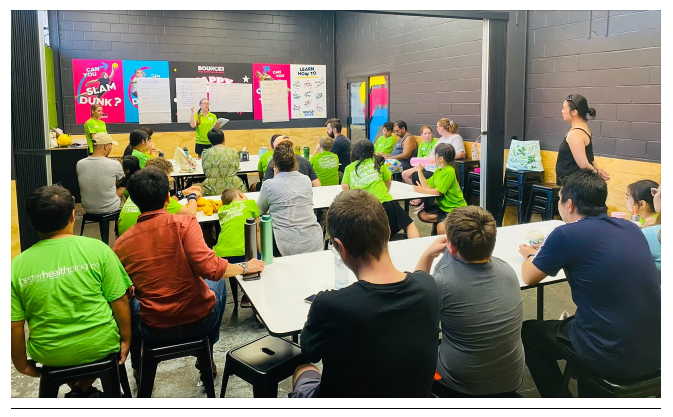
The Better Health Program is a free, 10-week healthy lifestyle program for 6-12 year olds and their parent or carer. The program is free for eligible families in Western Australia thanks to the WA Department of Health and can be done online or in person.
Across the program families learn about healthy eating, reading food labels, battling screen time and building healthy habits through fun and interactive weekly sessions. Families receive support from qualified health professionals throughout the program, along with resources and motivational freebies like free sports equipment!
Group-based: Term 4
Online: Flexible starts – start as soon as you register!
Who is eligible:
- Children aged between 6-12 years, living in Western Australia.
-
AND one of the following:
-
Classified as ‘above a healthy weight’ based on CDC BMI growth charts (>85th percentile for age and gender) at program commencement as measured for healthy growth check 1.
- OR referred directly by qualified primary care, allied health, or community health professional, requiring healthy lifestyle support and school health nurses.
When: Registrations are open now!
How: To sign up please visit: https://betterhealthprogram.org/ or call 1300 899 736
Download the flyer here:
Active8
If you are a parent or carer of a child in their early years who struggles with healthy eating, physical activity and active play ideas, the Active8 Program can help your family make healthy changes.
You can help your child learn healthy lifestyle habits that can reduce the risk of illness and support them to lead a healthy life.
The WA Department of Health is funding free places on the Active8 Program for children aged 2-5 years and their families throughout WA.
Connect with your own health coach over the phone and other parents in an online environment. The online format provides flexibility for busy parents whilst still supporting families to establish healthy habits for young children.
The evidence-based program is being delivered by health professionals online.
Start the 9-week program as soon as you enrol. For more information or to sign up go to: https://theactive8.org/wa
Term 4 registrations are now open for in person programs.
Locations for our FREE in person programs are:
Better Health Program:
- Cannington – BOUNCE
- Joondalup – BOUNCE
- Osborne Park – BOUNCE
The Active8 Program:
- Healthridge – Spiers Centre (spots limited!)